
From Realism to Abstraction
Peeling Back Layers to Reach Emotional Essence
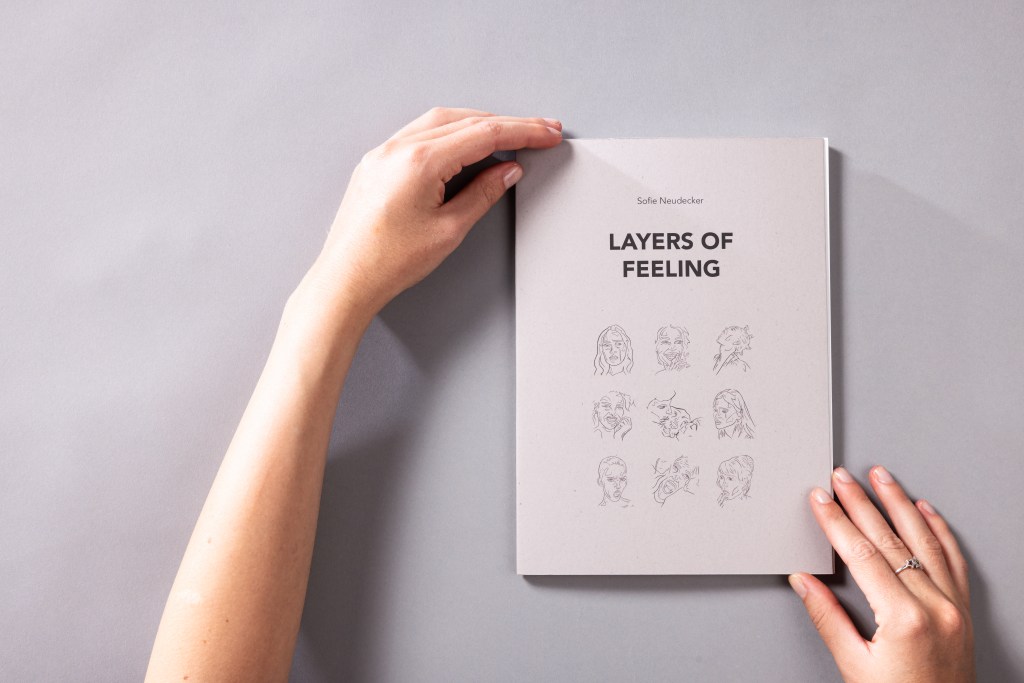
Project type
Master’s Thesis Artistic Project,
Illustrated Poetry Book
semester
SS 2025
Supervisors
Dipl. Des (FH) Magnus Feil MFA,
Prof.ssa Marina Bindella
(Accademia di Belle Arti Roma)
Category
Book Design, Swiss Binding, Writing, Multi-Style Illustration, Layout Design
A Book That Invites
You to See, Touch, and Feel
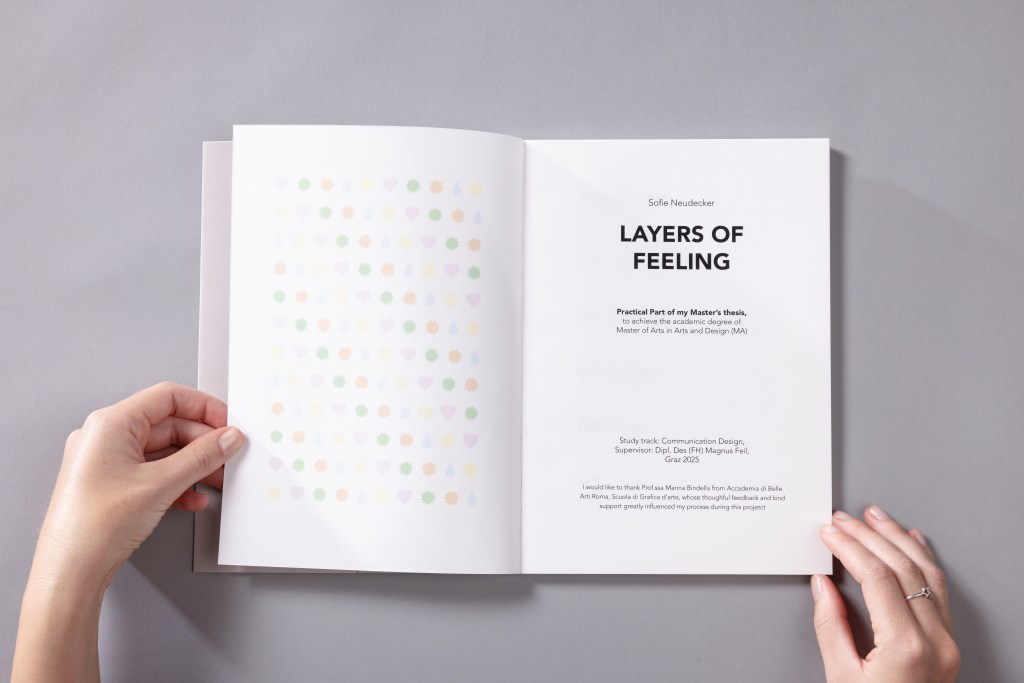
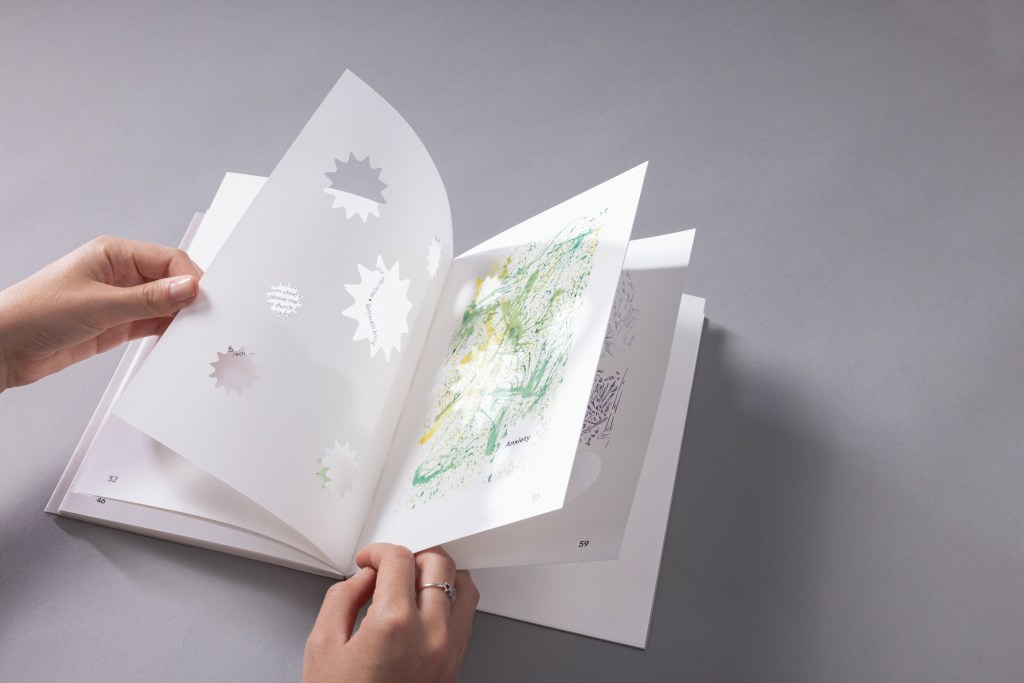
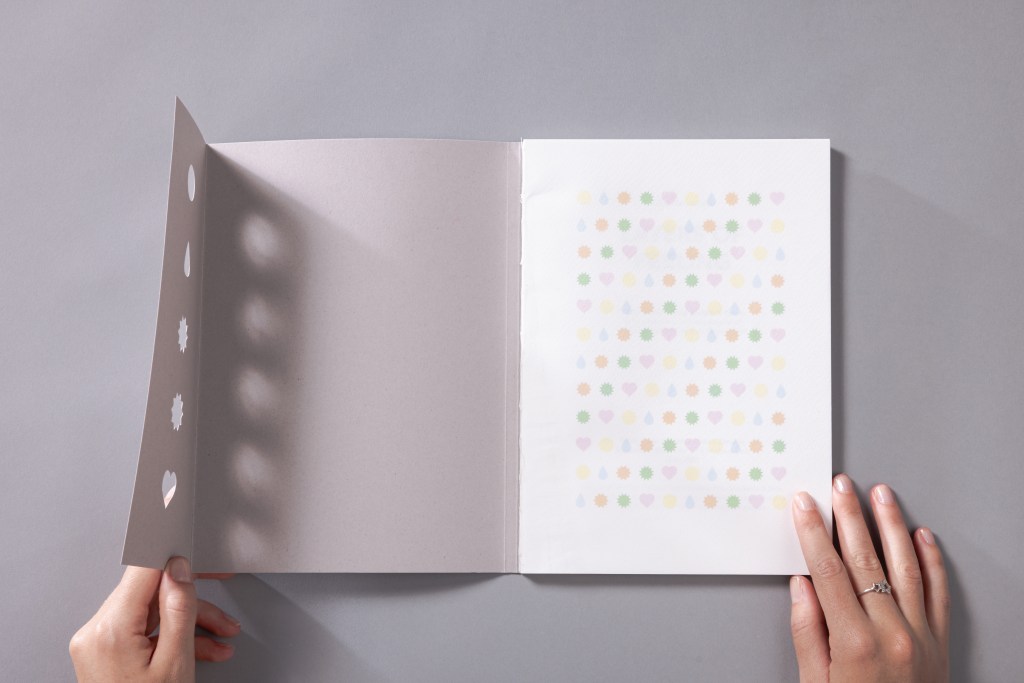
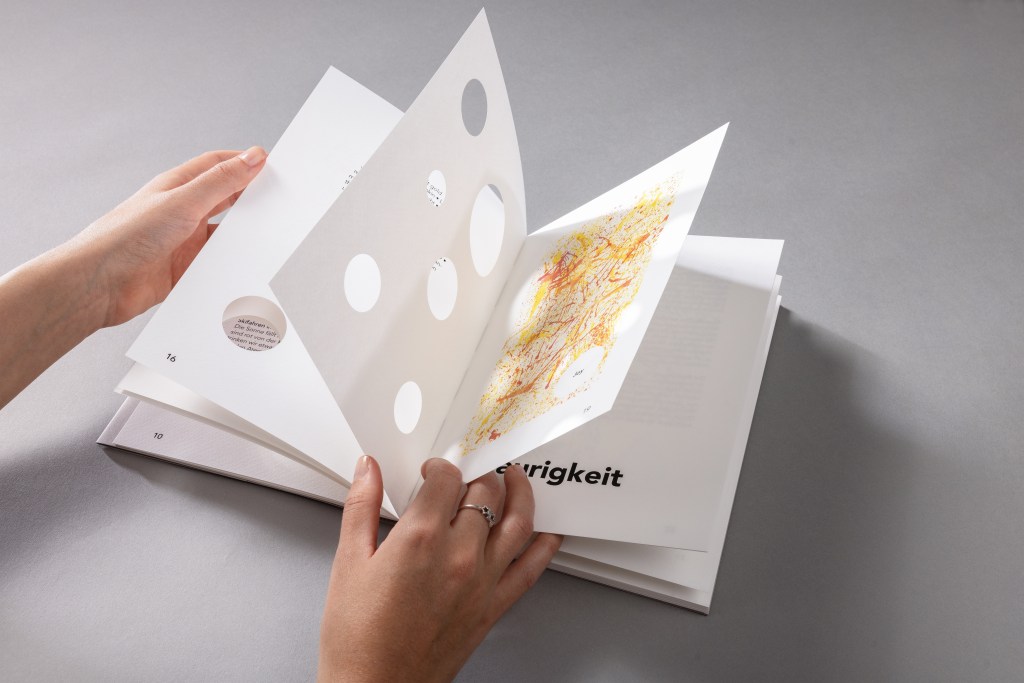
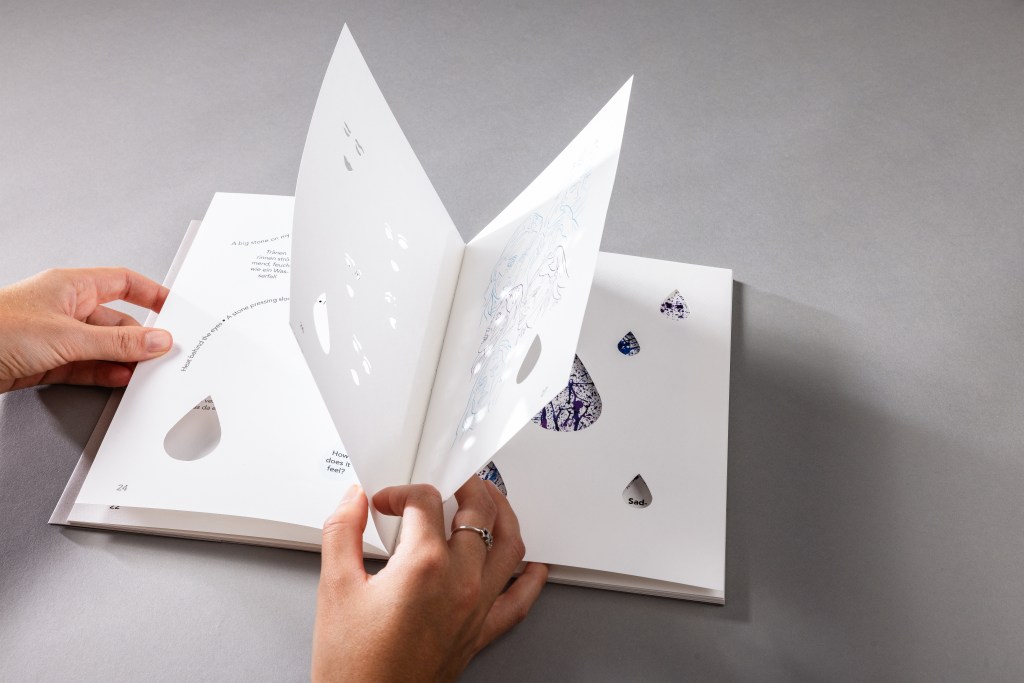
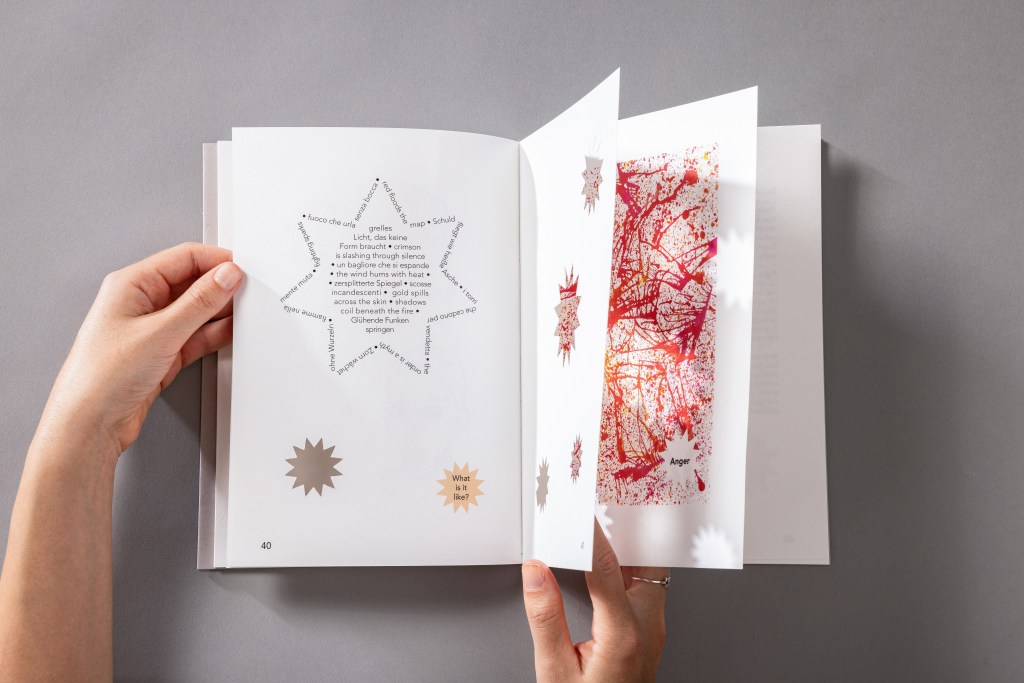
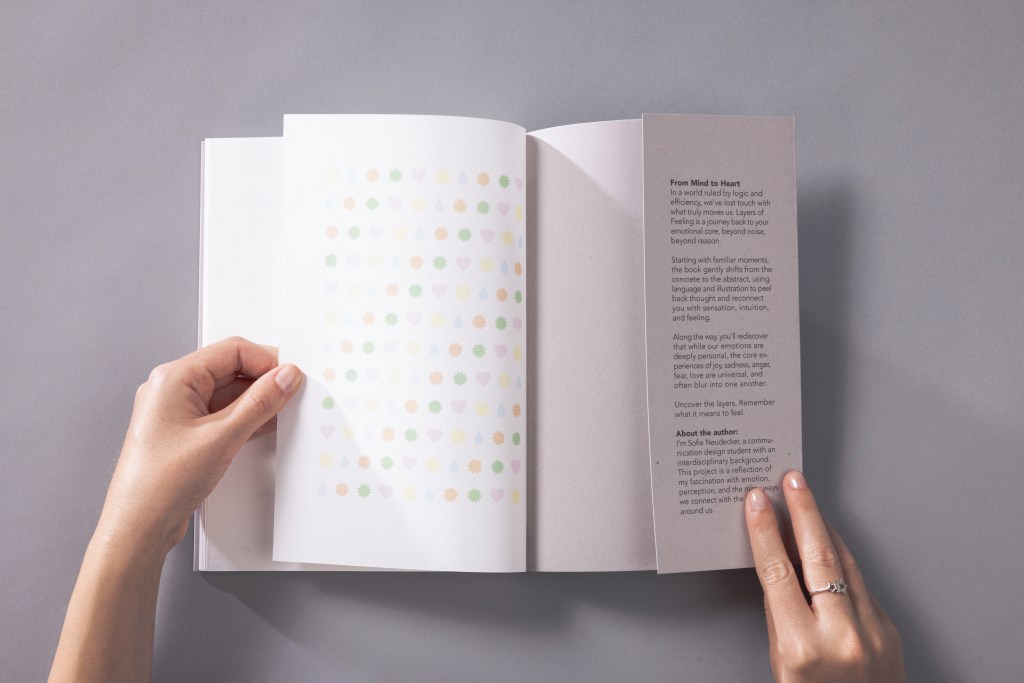
Layers of Feeling is an illustrated artist’s book that moves from realism to abstraction, with five chapters (Joy, Sadness, Anger, Fear, Love) each using layered design to pare detail down to essential emotional forms. Combining realism, abstract gesture, trilingual text, evolving colour, and cutouts, it creates a tactile, multisensory experience that positions the printed book as an intimate counterpoint to flat digital media.
Chromatic Language
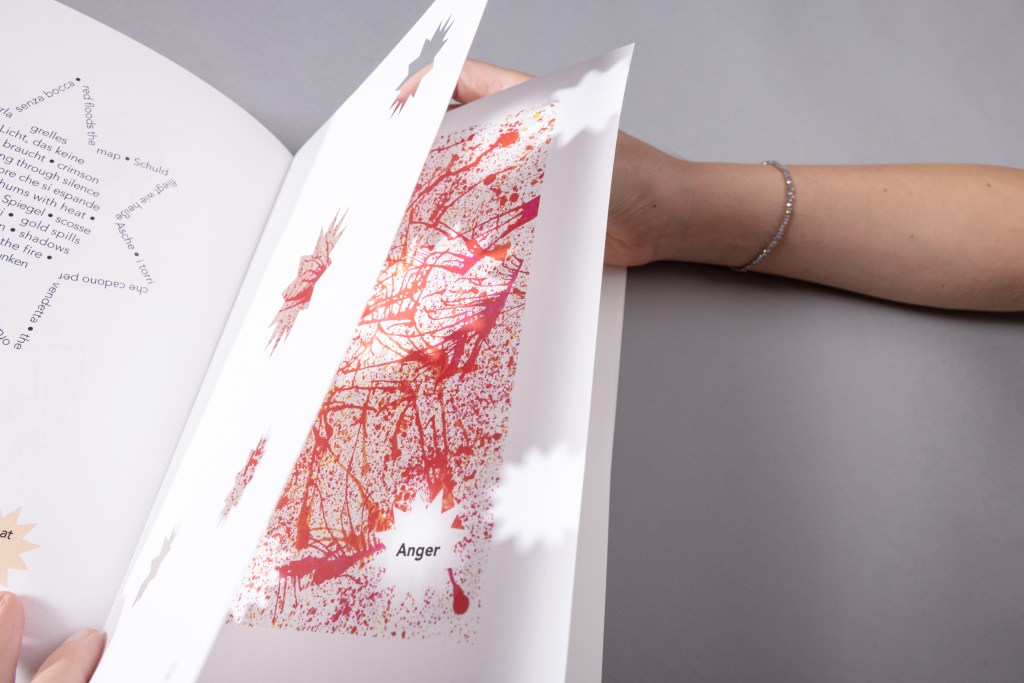
Each emotion has a dedicated colour spectrum that is repeated across every stage of abstraction to ensure emotional and visual cohesion. Hand-blended gradients offset flat tones, contrasting modern uniformity with artisanal colour, and echoing Falcinelli’s Cromorama and 2025 Rome shows such as Valentino’s Red and Fontana retrospectives.
Stages of Abstraction
See the illustrations in detail:
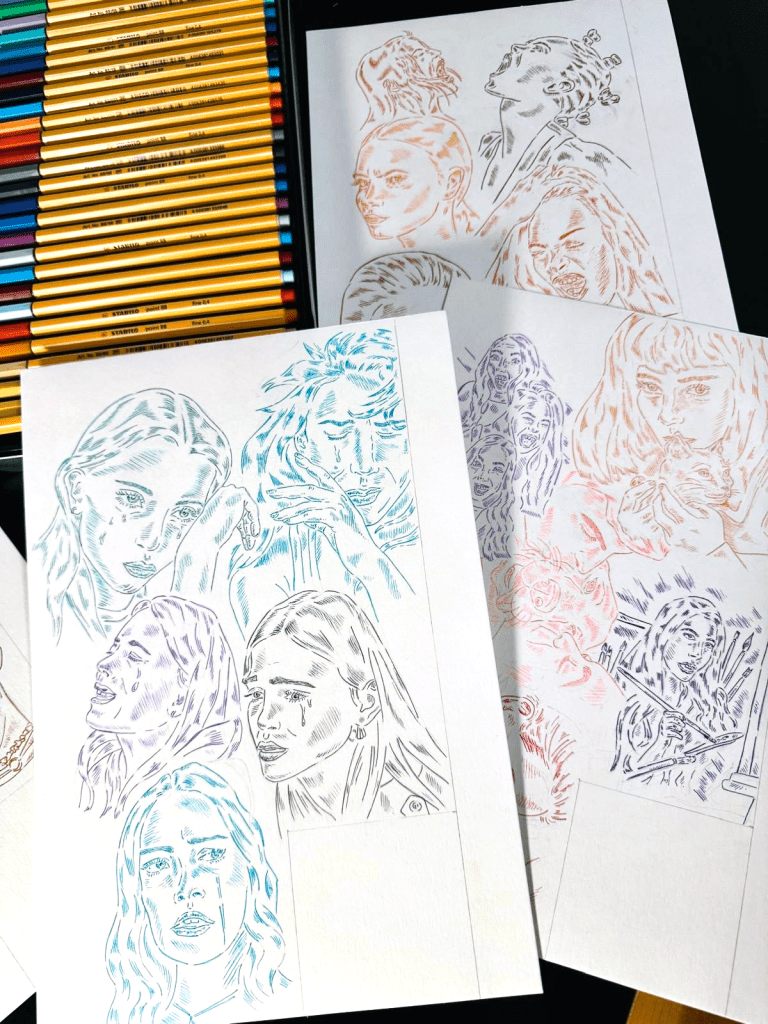
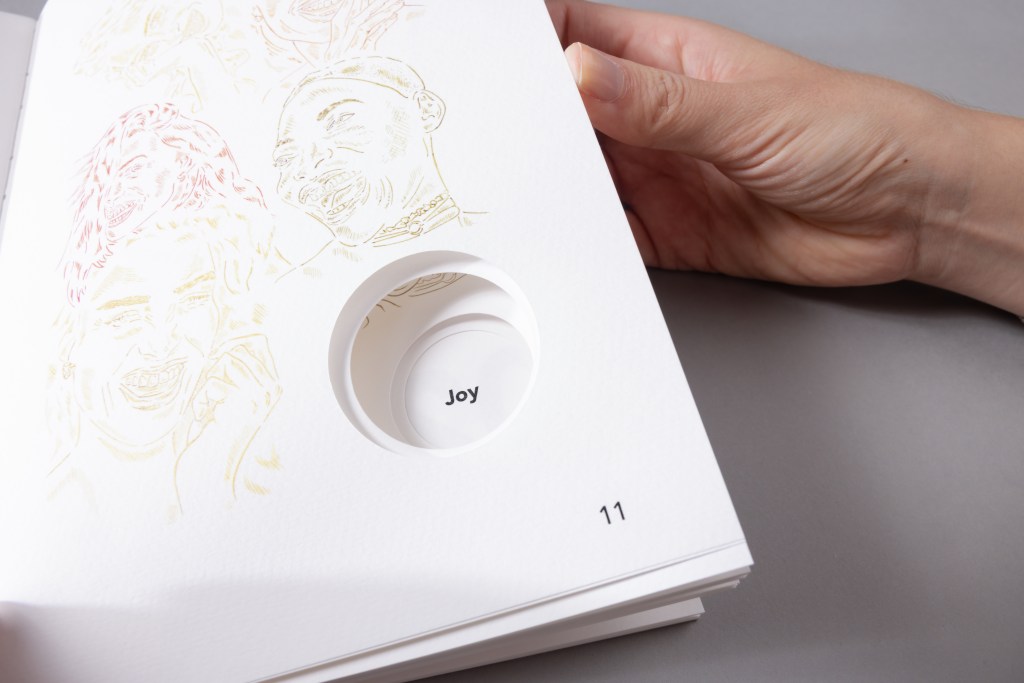
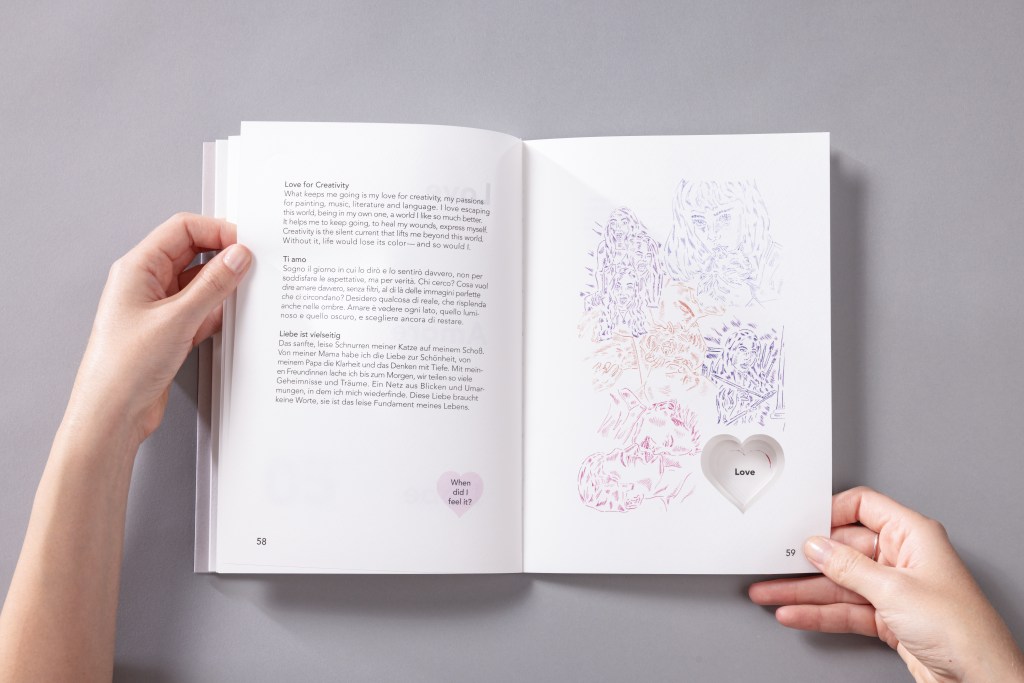
01 Realistic Fineliner
Inspiration: Andreani, Campagnola, Dürer, woodcut detail translated to fineliner.
Semiotics: Iconic, close resemblance, recognisable likeness.
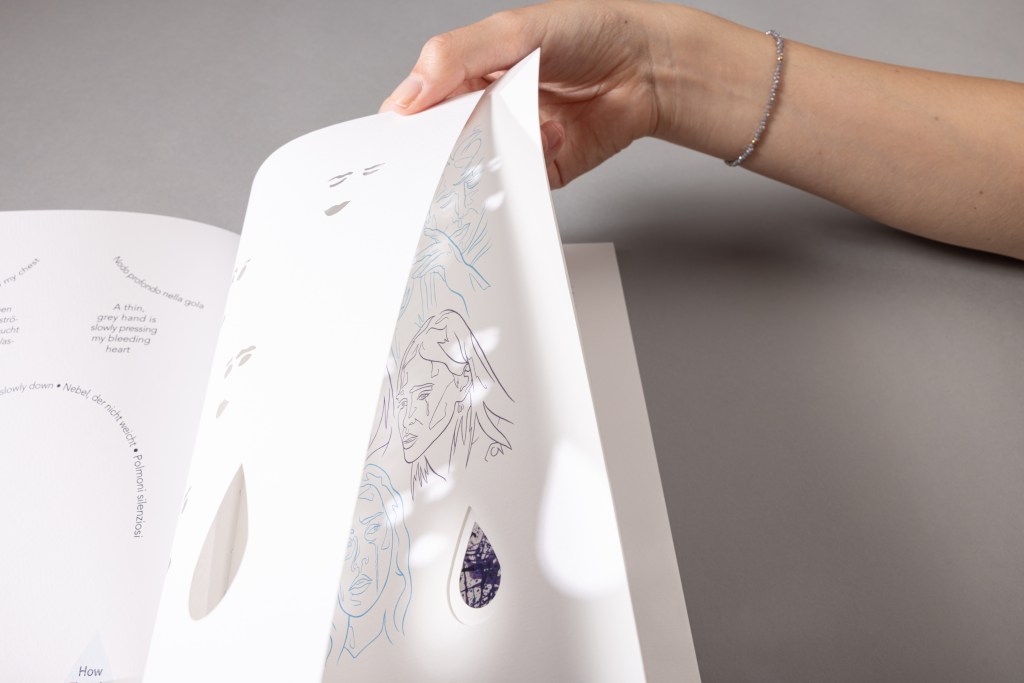
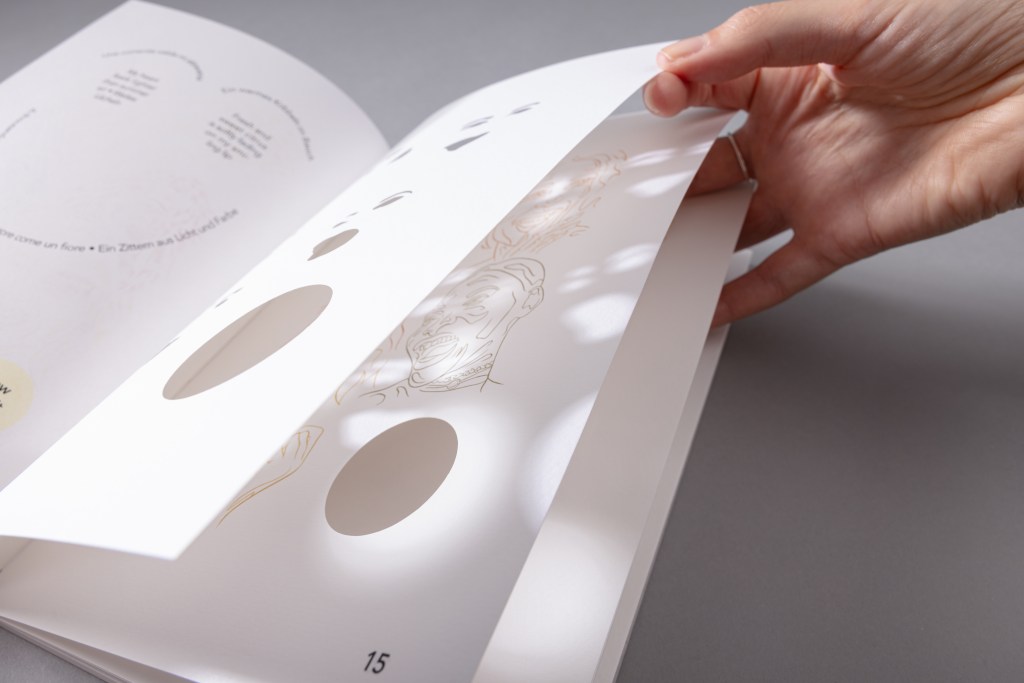
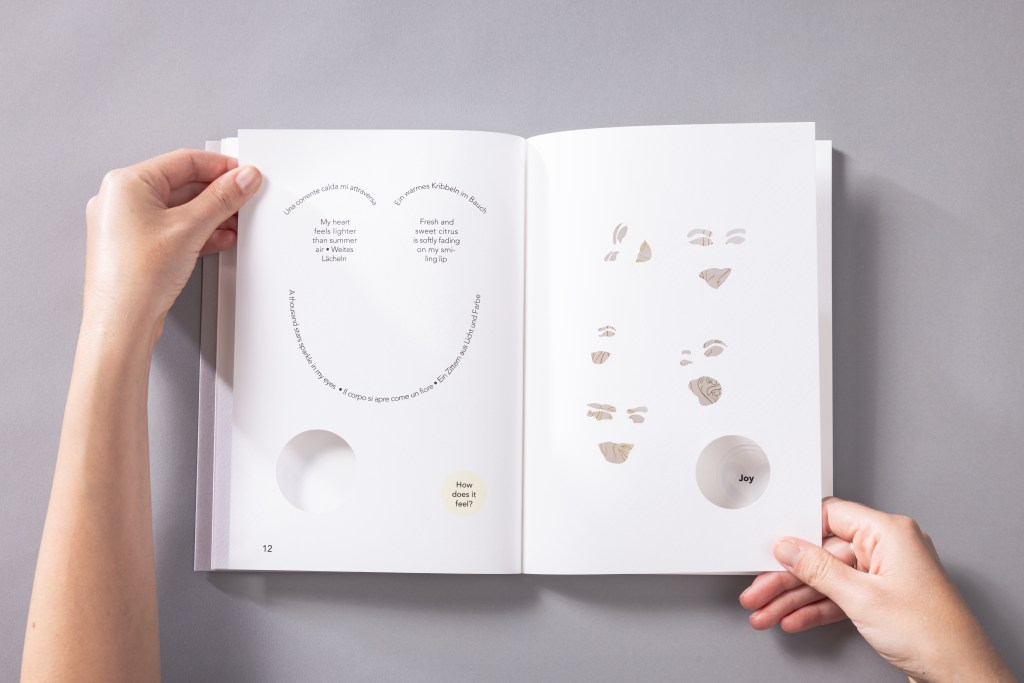
02 Facial Cutouts
Inspiration: Katsumi Komagata, paper-layering and cutouts from Blue to Blue.
Semiotics: Indexical, negative space as part-iconic hint of expression.
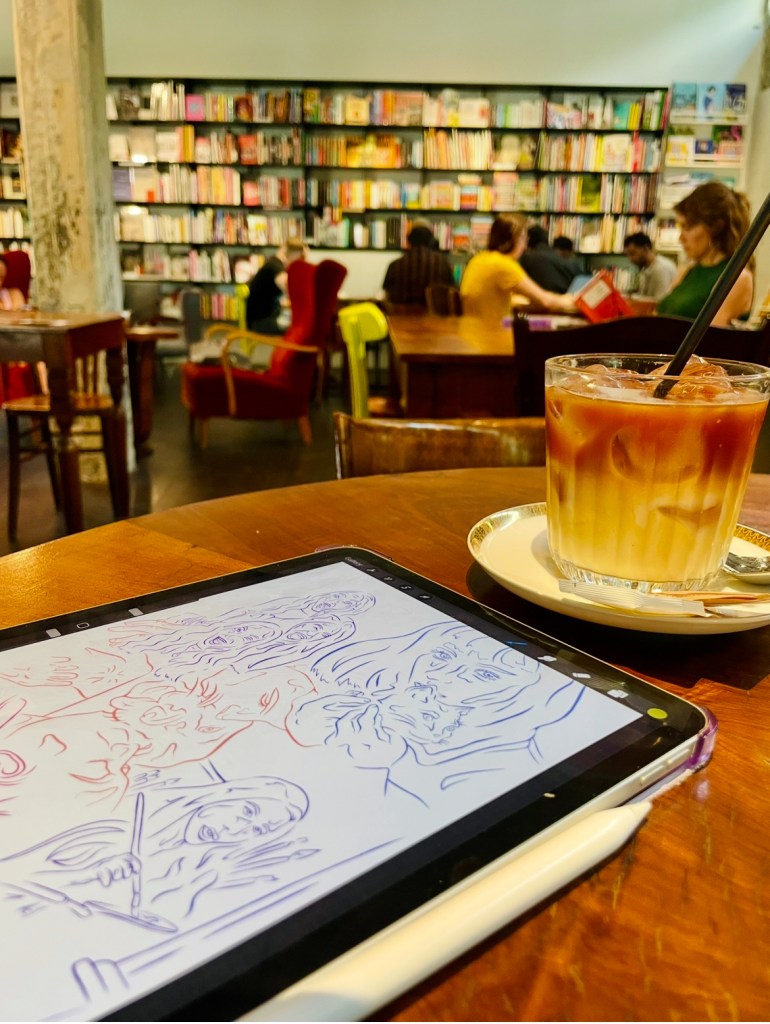
03 Minimal Outline
Inspiration: Barnabei, Thuile, Kandinsky’s spiritual line, refined in Procreate.
Semiotics: Icon → symbol, reduced contours that remain referential.
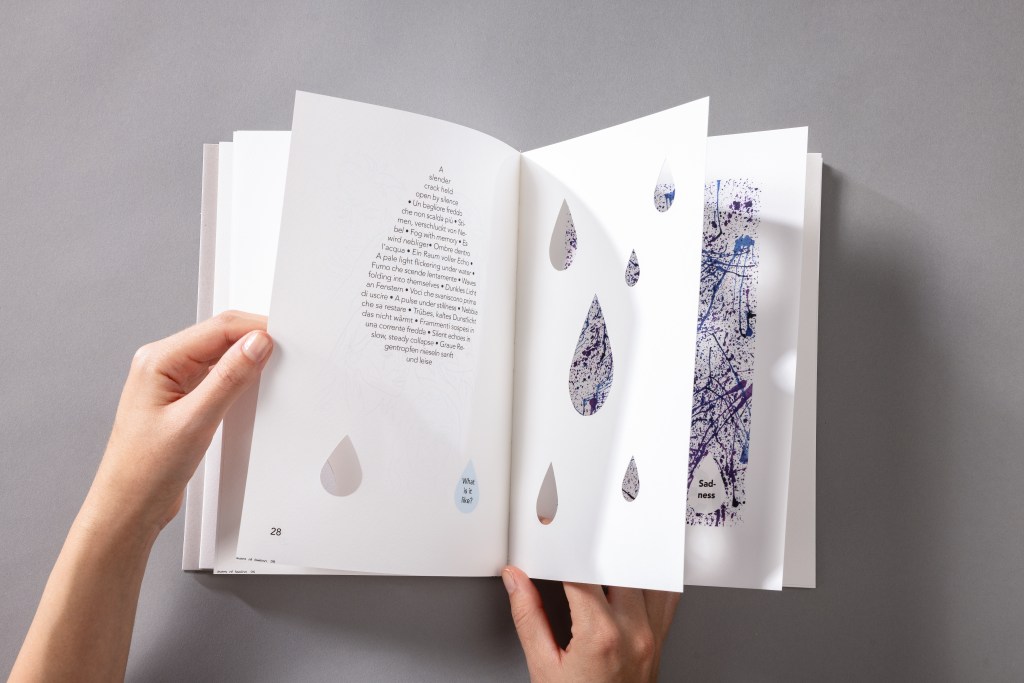
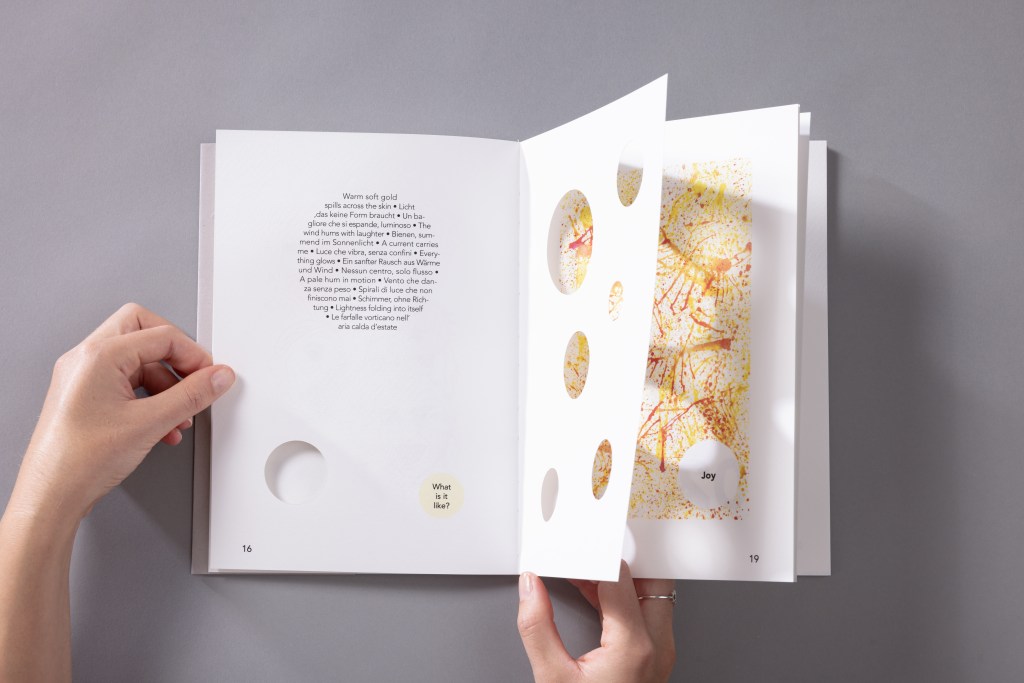
04 Symbolic Cutouts
Inspiration: Munari, recurring geometric cutouts in books like Viaggio nella fantasia.
Semiotics: Symbolic, culturally coded shapes standing for emotion.
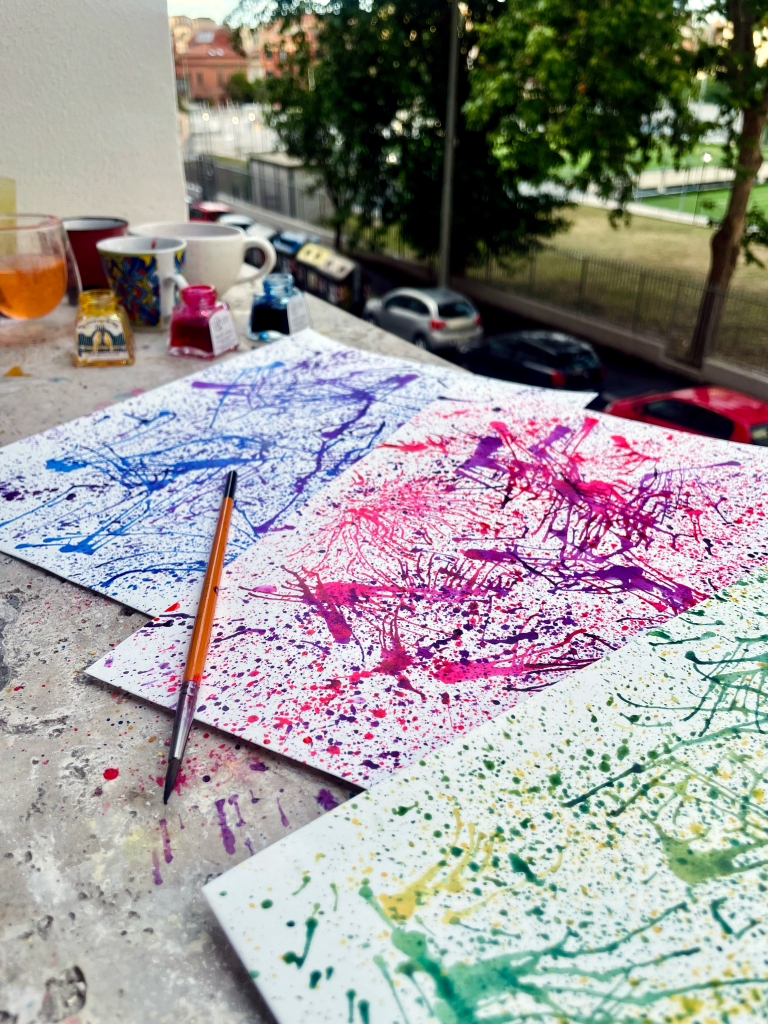
05 Abstract Ink Brush
Inspiration: Pollock’s spontaneous brushwork, gestural ink mark-making.
Semiotics: Abstract sign, non-iconic, meaning through Context
Gallery Final Book Design






Stages of Textual Abstraction
Realistic
When did I feel it?
Shape: Conventional vignette with full sentences.
Semiotics: Iconic and indexical
Transitional
How does it feel?
Shape: Word-clouds forming emoji-like faces.
Semiotics: Bridges icon and symbol
Abstract
What is it like?
Shape: Condensed glyphs echoing cutout shapes, minimal.
Semiotics: Mainly symbolic with residual iconic cues




 Sofie Neudecker