
Removing brand cues to study authenticity, emotion,
and how we read images.
Fictional Advertisement Campaign

Project type
Master’s Thesis Applied Project,
Fictional Advertisement Campaign
semester
SS 2025
Supervisors
Dipl. Des (FH) Magnus Feil MFA
Category
Photo Lab Work, AI Editing, Branding & Advertising Principles
Isolating the Face as a Semiotic Laboratory
This project treats the human face as the campaign’s single experimental variable. Photographed in a neutral white studio, each image removes contextual cues so gaze, micro-expression, and posture become the primary signifiers. By stripping away product storytelling and brand baggage, the series functions as a controlled test of how minimal visual elements build meaning and emotional value.
Method & Setup
Eight poster variants map cognitive vs. pathemic engagement and interaction vs. no interaction (model ↔ viewer, model ↔ product, model alone), arranged following Codeluppi’s Leggere la Pubblicità. A neutral white cube serves as placeholder product, referencing Bruno Munari and the white-cube gallery. Typography is minimal to keep focus on facial communication.
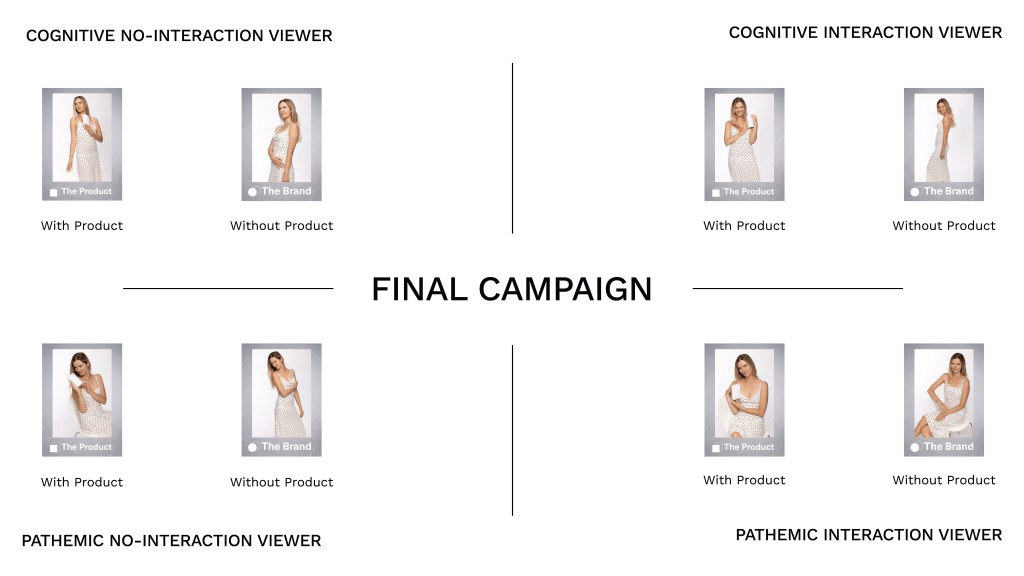

Final Poster Series
With Product
Cognitive – no interaction viewer
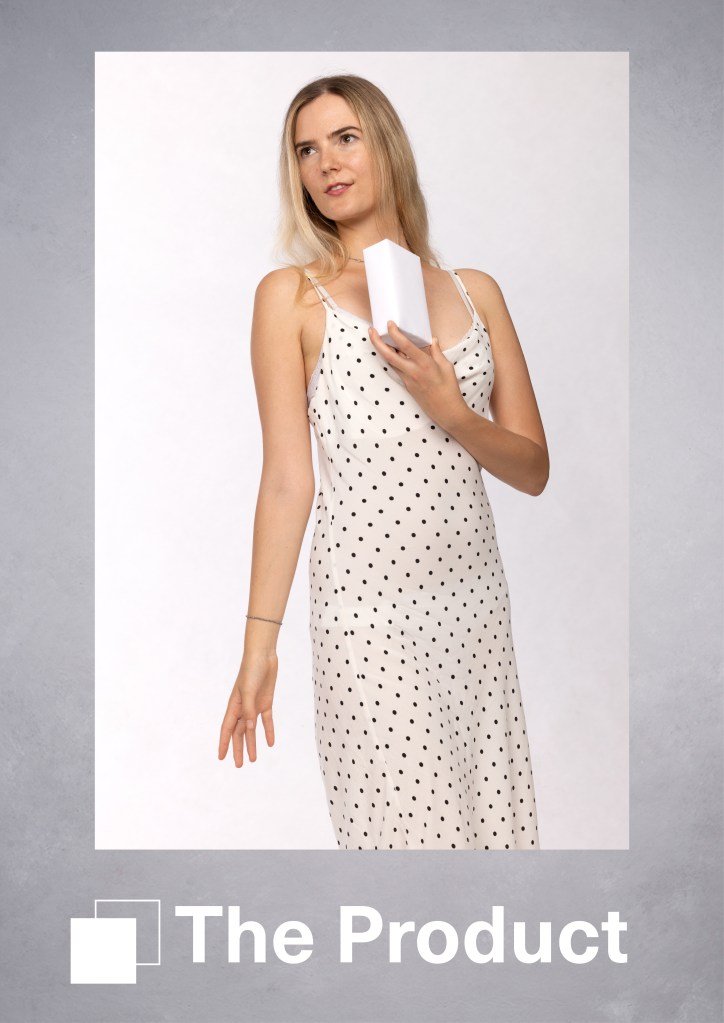
With Product
Cognitive – interaction viewer

With Product
Pathemic – no interaction viewer

With Product
Pathemic – interaction viewer

Without Product
Cognitive – no interaction viewer

Without Product
Cognitive – interaction viewer

Without Product
Pathemic – no interaction viewer

Without Product
Pathemic – interaction viewer

Ethical & AI Reflections
In the final phase, visuals were extended with AI-enhanced filters and fully AI-generated variants to test their effect on perception. AI-generated images scored high on visual appeal, but viewers often rated unedited photos as warmer and more trustworthy, raising ethical questions about consent, authorship, beauty norms, and the social impact of pervasive image manipulation.



Natural Photograph
vs. Applied AI Filter


Images Fully
Generated by AI
These images were generated entirely from scratch, with the model’s face scanned using Remini. Most survey participants found them fascinating and full of potential. Still, many also raised concerns about authorship, loss of authenticity, and the disappearance of the small imperfections that make faces relatable.



Conclusion
Practical Takeaways
Faces alone can powerfully anchor brand meaning, but medium and editing choices decide whether that meaning feels genuine or manufactured. Here is some advice for practice in real design contexts: use authentic, minimally retouched faces for trustworthy and relatable brand visuals, make use of AI for rapid ideation, large-scale testing and general conformity, always test across audiences and disclose synthetic use, and match gaze, posture and editing to the campaign objective.
 Sofie Neudecker